 Login
Login
 EN
EN
 English
 French

What are the Component Distributor Types in Electronics?
As the electronics industry, and the sheer quantity of products incorporating electronic content, has mushroomed over the years, so have the options for component sourcing for your manufacturing line. One of the largest options is electronic distribution, now almost a $400 billion-dollar global market according to Verified Market Research.
Electronic component distributors play a significant role in the sourcing of components not only because they are dedicated to supplying the right parts, at the right time, at a fair price, but also because they provide additional valuable services to their customers, like inventory management, just-in-time delivery, custom kitting, and real-time pricing.
From a business that began in many small home garages around the country and the world, the distribution sector has grown through sheer volume and a focus on service to become an important factor in the overall economy. This growth in electronic component sourcing through distributors has also led to a diversification in the types of distributors that serve the market.
Understanding the distribution sector, and the services it can offer you requires a bit of explanation of the various types of electronic component distributors currently working to fill customer needs. Here’s a run-down of the various distributor classifications in use today, recognizing that even though this list is extensive, it may not be all-encompassing.
Remember that this list is very broad, and individual distributors may see themselves in one or more of these categories, depending on their marketing strategy.
Types of Electronics Distributors
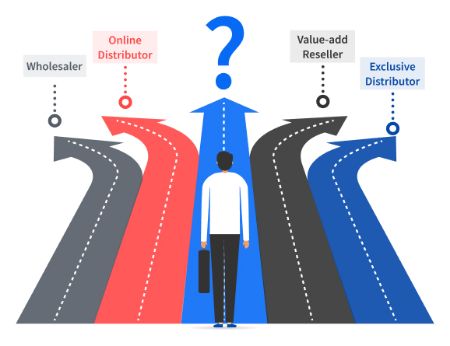
A Wholesaler is an organization that buys components in bulk at a discount from manufacturers then resells them in smaller lots to retailers or manufacturers for a profit.
An Authorized or Franchised Distributor works directly with component manufacturers, actively promoting and selling their products into various channels through relationship building and marketing efforts. Their ongoing relationships help ensure part traceability and fewer suspect parts.
An Independent Distributor sources products from the global market and usually has no affiliation with a particular brand or manufacturer. While often helpful in part shortage or obsolescence situations, they offer less protection from suspect parts.
A Hybrid Distributor may act independently or as a franchised distributor for specific product lines. They may also offer limited distribution services like inventory management.
A Catalog Supplier is a type of distributor that usually offers several product lines in small batch quantities, often with no minimum order quantity, and typically through a specialty catalog aimed at a specific market.
An On-Line Distributor, as the term connotes, is a distributor that sells products through e-commerce platforms and offers convenience, search and browse capabilities, 24-hour ordering, price comparisons, and real-time inventory and pricing.
An Off-Line Distributor typically uses physical stores, regional sales offices, or direct sales teams to sell products. Their retail presence offers immediate pick-up of parts from the covered locations.
A Value-Added Reseller is essentially a distributor that buys parts from a manufacturer and then bundles-in additional features or services to add value to the parts before reselling them to customers.
An Industry-Specific Distributor is one who, as the name implies, sells parts into a specific market, offering technical expertise and ongoing relationships with manufacturers.
A Specialized Distributor typically offers expertise in a particular technology area and stocks components specifically for that technology. OnlineComponents.com and Master Electronics are a combination of a specialized distributor (as the focus is on Interconnect, Passive, and Electromechanical [IP&E] solutions) and value-added reseller due to the value-add services offered.
An Exclusive Distributor is one who is typically granted the exclusive rights to sell a manufacturer's product or specific products in a defined territory.
A Broad-Line Distributor typically offers a wide variety of parts across multiple categories, usually working with customers with large production runs that may require scheduling and storage.
A High Service Distributor tends to focus on customer service, offering a limited number of stocked parts and selling in small quantities with quick shipping, usually for prototyping or small production runs.
An Independent Sales and Marketing Organization (ISMO) acts more like a sales agent than a distributor as they carry no stock and typically source components for a customer as needed.
Choosing a Distributor
An efficient working relationship with a quality parts distributor can be a solid business asset. Before taking steps for your company down this road, it is wise to learn about the distributor’s industry expertise and experience. Additional factors to consider are any quality control processes or certifications the distributor maintains, particularly in the area of parts testing and verification prior to delivery.
Once you determine the availability and inventory levels for the parts you need, you may also ask for an authenticity guarantee to make sure the parts come from specific manufacturers.
Finally, it may be important to your company to know about a particular distributor’s geographical coverage and/or shipping logistics capabilities.
All of this discovery should also come before you even begin to talk about component price.
You can learn more about part sourcing from our friends at CircuitBread.com. They offer educational materials and an Industry Lead Time Monitor at: www.circuitbread.com/friends/perks/tools.
Summary
How a particular distributor positions itself in the marketplace, and the terms used to describe it can have a very large bearing on how well they will work with you to meet your parts sourcing needs. Many modern distributors will fall under several of the terms on our list, and offer a variety of services and support to meet the needs of their various customers.
The electronic component distribution business is a large and efficient industry that reacts quickly to changing situations and trends to service its many and varied customers. To make sure you get what you need, be certain to ask lots of questions.